


How to Build a Modest Wardrobe That Lasts
Want a wardrobe that reflects your values and stands the test of time? Here's the key: focus on quality, timeless pieces, and proper garment care. Building a modest wardrobe isn't just about covering up; it's about thoughtful choices that balance faith, practicality, and durability.
Key Takeaways:
- Invest in quality fabrics like cotton, linen, wool blends, and Nidha for long-lasting wear.
- Curate versatile staples such as abayas, thobes, and neutral-toned pieces for easy mixing and matching.
- Care for your clothes by washing gently, avoiding tumble drying, and using breathable storage solutions.
- Adapt to seasons with smart layering in winter and lightweight fabrics in summer.
A smaller, intentional wardrobe reduces waste, saves money, and aligns with Islamic principles of simplicity and stewardship. Ready to start? Focus on timeless, durable essentials and make them last with proper care.
What Makes a Modest Wardrobe
Creating a modest wardrobe that stands the test of time starts with understanding its fundamental principles and aligning them with your personal needs.
Core Principles of Modest Fashion
In Islam, modest dressing reflects the concept of Haya, which encompasses humility, self-respect, and devotion to Allah. Key elements include clothing that covers the 'awrah, maintains a loose fit, and uses thick, non-transparent fabrics.
"Modesty is not just a dress code in Islam - it's a way of life. It reflects humility, self-respect, and submission to Allah ﷻ." - Almanaar Islamic Store
Approach your wardrobe with niyyah - the intention to please Allah - turning everyday choices into acts of worship. This means focusing on cleanliness, simplicity, and avoiding garments that attract unnecessary attention. In the UK, these principles are easily integrated into daily life through layered modesty. For example, you can pair traditional items like abayas with high-street staples such as trench coats, wide-leg trousers, or oversized blazers.
Once you've embraced these principles, the next step is tailoring your wardrobe to your lifestyle.
Setting Your Wardrobe Goals
Using these modest fashion guidelines, start by defining clear wardrobe goals. Think about your daily activities - whether it's prayers, studying, work, or special occasions like Eid. Each setting calls for a slightly different approach. For instance, you might prioritise comfort for study sessions or opt for sharp, layered looks for professional settings.
Budgeting is another important step. Set a specific amount in pounds (£) and follow the "Two-Outfit Rule": only purchase items you can style in at least two different ways. Investing in high-quality basics often pays off. A plain black Nidha fabric abaya, priced between £38 and £46, or a versatile maxi dress can offer much more value than chasing fleeting trends.
Choose silhouettes that complement your shape, such as A-line, straight, or Farasha styles, and pick fabrics that match the season. For example, cotton and linen are perfect for summer, while wool blends are ideal for winter. Lastly, keep your measurements updated and check brand-specific sizing charts to minimise returns.
Choosing Durable Fabrics and Quality Construction
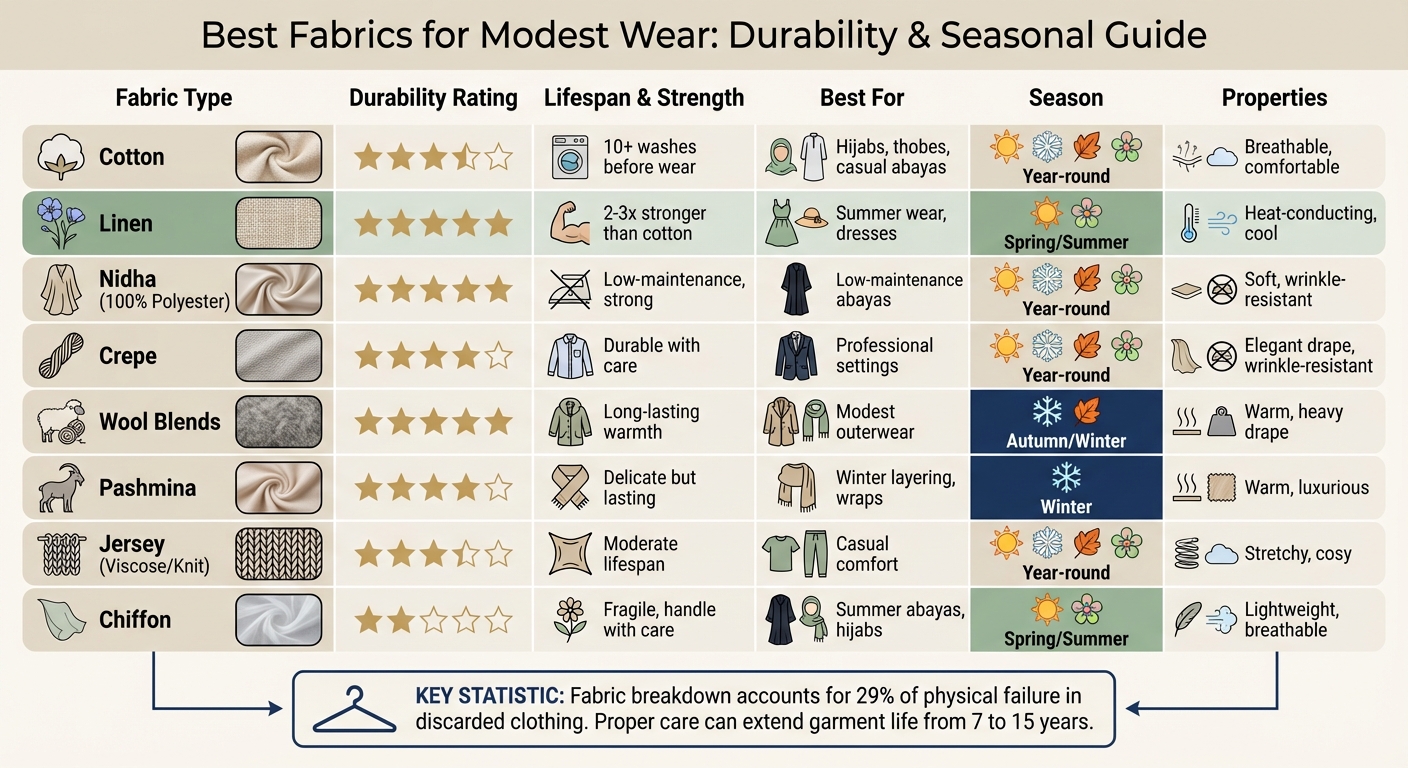
Best Fabrics for Modest Wear: Durability and Seasonal Guide
Once you’ve set clear goals for your wardrobe, it’s time to focus on fabrics and construction. Picking materials that stand the test of time ensures your garments maintain their quality, even after countless washes. This approach not only supports a long-lasting modest wardrobe but also aligns with sustainable fashion practices.
Best Fabrics for Modest Wear
When it comes to durability and comfort, cotton is a dependable choice. It’s breathable and scores a 4/5 for durability, typically withstanding 10 or more washes before showing signs of wear. This makes it a great option for hijabs, thobes, and casual abayas that can be worn year-round. For warmer days in the UK, linen is an excellent alternative. Known for being two to three times stronger than cotton, linen also has impressive heat-conducting properties, keeping you cool during summer.
For those who prefer low-maintenance fabrics, Nidha is a standout. This 100% polyester material offers a perfect 5/5 durability rating while remaining soft to the touch. Similarly, crepe is a go-to for its elegant drape and wrinkle resistance, making it ideal for professional settings where ironing isn’t always practical.
"Linen fabrics fibres comes from the Flax plant, the outcome of using this fabric is that it's stronger than cotton by two or three times." - Aaliya Collections
As the colder months roll in, consider wool blends and pashmina for their warmth and heavy drape, which are perfect for modest outerwear. For year-round comfort, jersey fabrics, often made from viscose or knit blends, provide a stretchy and cosy feel.
Once you’ve chosen your fabrics, it’s equally important to ensure the garments are well-constructed for durability.
How to Check Garment Quality
Before buying, try this simple light test: hold your abayas or hijabs up to natural light to assess the weave density. A tighter weave ensures better coverage and increases durability. Next, inspect the stitching - look for neat, straight hems with no loose threads. Uneven stitching or "bird-nesting" (tangled thread) can be a red flag for poor craftsmanship.
"Look at garment stitching - are there any loose threads, and are the hems tidy and straight? Loose threads or uneven stitching can be a sign of poor quality." - Kate Hobson-Lloyd, Fashion Ratings Manager and Materials Expert, Good On You
Pay attention to bar tacks - these are small, dense zig-zag stitches placed at stress points like pockets and shoulders, designed to prevent tearing and extend garment life. Test zippers to ensure they glide smoothly without catching, and check that buttons are sewn with a small thread stem (called a "shank") for added durability. If the garment has embellishments, turn it inside out to confirm the backing is secure and won’t irritate your skin.
It’s worth noting that fabric breakdown accounts for 29% of the physical failure in discarded clothing. By choosing the right fabrics and caring for them properly, you can double a garment’s lifespan from seven to nearly 15 years. Always refer to care labels for guidance - linen, for instance, requires a high ironing temperature (three dots), while synthetics need only low heat (one dot). A little extra attention to these details can make all the difference!
Building a Capsule Modest Wardrobe
Once you’ve grasped the importance of durable fabrics and quality craftsmanship, it’s time to focus on curating the foundation of your wardrobe. A capsule wardrobe typically includes 30 to 50 versatile items that can be mixed and matched across seasons and occasions. The key is selecting pieces that strike the right balance between practicality and style. By following some simple strategies, you can create a wardrobe that works effortlessly for every aspect of your modest lifestyle.
Start with neutral colours like black, white, grey, beige, and navy. These tones provide a cohesive base, and you can add one or two signature shades to give your wardrobe a personal touch. Before making any purchases, apply the 'Rule of Two': only buy an item if it can be styled into at least two different outfits. This approach helps you avoid impulsive buys and keeps your wardrobe intentional.
"A capsule wardrobe comprises versatile items that mix and match for every occasion." - T. MacInnis, Writer
To figure out which pieces deserve a spot in your capsule, try the hanger trick. At the start of a season, turn all your hangers in the same direction. After wearing an item, flip its hanger. By the end of the season, you’ll know which clothes you actually wear and which ones just take up space. This simple method makes refining your wardrobe much easier.
Now, let’s dive into the essential categories that form the backbone of a capsule modest wardrobe.
Must-Have Abayas for Your Wardrobe
For women, a well-rounded abaya collection is indispensable. Start with a classic black abaya - it’s timeless, elegant, and perfect for daily wear. Opt for breathable fabrics like high-quality cotton that can handle frequent washing while maintaining their structure.
Next, include an open or layering abaya, similar to a duster coat. These are incredibly versatile and can be styled over wide-leg trousers or slip dresses, making them suitable for both casual outings and more formal occasions. Neutral tones like beige, sage, or navy ensure they blend seamlessly with the rest of your wardrobe.
Finally, invest in an occasion abaya featuring embellishments or embroidery for special events like weddings or Eid. Pair it with a neutral slip dress in black, white, or beige to keep the look cohesive and modest.
Core Thobes and Menswear Basics
For men, a modest capsule wardrobe starts with a focus on quality thobes. A crisp white thobe is essential - it aligns with Sunnah traditions and works well for both daily wear and Jumu’ah. Adding a second thobe in grey or earthy tones gives you some variety for different settings.
"Wear white clothes, for they are among your best clothes." - Prophet Muhammad (as cited in Tirmidhi)
Beyond thobes, include a few versatile options like neutral chinos or tailored trousers in navy or grey. These can be paired with Western-style modest pieces for a more contemporary look. A smart navy suit is another must-have for formal occasions, and its trousers can double as standalone pieces when paired with casual button-down shirts in white or blue. Every item should serve multiple purposes, ensuring you get the most out of your wardrobe.
Supporting Pieces and Accessories
To maximise the flexibility of your capsule wardrobe, include supporting layers that expand your outfit options. Neutral slip dresses in black, white, and beige are essential under-layers, providing coverage beneath sheer or open abayas without clashing. For a touch of variety, consider a textured or patterned slip dress.
Wide-leg trousers and palazzo pants are perfect for creating modest silhouettes when paired with tunics or long-sleeve blouses. Maxi skirts in fabrics like satin or denim add a sense of movement and elegance without adding bulk.
Accessories and hijabs are the finishing touches that personalise your wardrobe. Stock up on neutral hijabs in black, white, grey, and beige, and add a few patterned options for variety. A quality leather belt, a structured cardigan, and a practical tote bag can round out your collection, ensuring you’re prepared for any occasion while keeping your wardrobe streamlined.
sbb-itb-81d10cb
Caring for Modest Garments
Taking proper care of your modest garments not only ensures they last longer but also keeps them looking their best. How you wash, dry, and store items like abayas and thobes plays a big role in preserving their quality, colour, and overall appearance. With a few simple steps, you can keep your wardrobe fresh and ready for any occasion.
Washing and Drying Guidelines
Delicate fabrics like chiffon, silk, and crepe deserve special attention. Hand wash them in cold water with a mild detergent, and avoid soaking for more than 10 minutes to prevent the fibres from weakening. Everyday garments can go in the washing machine, but turn them inside out, place them in a mesh bag, and use a delicate or wool cycle at a maximum of 30°C.
"Hand washing an abaya is recommended, but save this for the ones with delicate embroidery or embellishments. Don't soak for more than 10 minutes and only scrub where necessary." - Persil Arabia
Stay away from harsh detergents, powders, or bleach, as these can fade colours and damage the fabric. For black garments, specialised "Abaya shampoos" work wonders in keeping their deep, rich colour. When drying, skip the tumble dryer - heat and agitation can shrink or distort the garment and wear out the fibres. Instead, hang items on wide, padded hangers in the shade to avoid fading.
For removing wrinkles, steaming is the safest option. If you need to iron, use a low heat setting and iron the garment inside out.
Stain Removal and Storage Tips
Once your garments are clean and dry, proper stain treatment and storage will keep them in excellent condition. If you notice a stain, gently dab it with a damp cloth instead of scrubbing, as scrubbing can damage the fabric or embellishments. For velvet abayas, treat stains by applying a mix of baking soda and lemon juice, then rinse with cold water. To avoid stains altogether, apply perfumes and ouds to your skin or hijab rather than directly onto the garment.
Storage also plays a big part in maintaining your garments. For seasonal or embellished pieces, use breathable garment bags - plastic bags can trap moisture and cause mildew. Hang your items on wide, padded, or velvet hangers to avoid "shoulder bumps" and preserve their shape. Keep garments in a cool, dry space with enough room to prevent overcrowding, and rotate them regularly to reduce wear. A lint roller is a handy tool for keeping dark fabrics looking polished between washes.
"A breathable garment cover will protect your abaya from dust and maintain its freshness." - Safa Islamic Lifestyle
Adapting Your Modest Wardrobe to UK Seasons
Dressing modestly in the UK comes with its own set of challenges, thanks to the country's famously unpredictable weather. To make the most of your wardrobe, it's all about layering smartly and choosing fabrics that suit the season. By combining practicality with style, you can maintain comfort and coverage no matter what the forecast says.
Layering for Autumn and Winter
When it comes to winter, layering is key, and a simple three-step system can make all the difference: start with a moisture-wicking base layer, add an insulating middle layer, and finish with a weather-resistant outer layer. The base layer is especially important because it keeps you dry - sweat-soaked clothing can quickly make you feel colder. Avoid cotton for this layer, as it traps moisture and dries slowly.
"The first step to staying warm is to ensure that the base layer - this is the fabric that is in contact with the skin - keeps you dry." - Iska Suleiman, Author
For base layers, merino wool is a fantastic option. Though it can be pricey (like Icebreaker's 100% merino tops at around £85), more affordable alternatives are available, such as Marks & Spencer's Heatgen™ thermals (£16) or Uniqlo's Heattech range (£24.90). Over this, add a middle layer made of fleece, wool, or acrylic knitwear to trap warmth. Finish with a longline coat or overcoat abaya to shield against wind and provide full-body coverage.
Accessories are equally important. Wool hats (worn over hijabs), scarves, and gloves help retain heat in colder months. Even summer chiffon abayas can be repurposed for cooler weather by layering them with thermal leggings, an inner slip, and a chunky cardigan - perfect for those transitional spring days.
As winter gives way to spring, you can begin to swap out heavier layers for lighter, airier options.
Dressing for Spring and Summer
In warmer seasons, the focus shifts to keeping cool while staying covered. Fabrics like chiffon, cotton, linen, and light crepe are perfect for spring and summer. Linen, in particular, is a great choice for hot days because of its thickness and ability to absorb moisture. For hijabs, light-coloured options are your best bet - they reflect heat better than darker shades.
If you prefer a bit more opacity, georgette is a good alternative to chiffon for single-layer outfits. Nidha fabric, with its soft and smooth texture, offers a sleek look without the clinginess of cheaper synthetics. For those unpredictable spring days, medium-weight crepe and viscose blends provide a balance between warmth and breathability, making it easier to adjust to fluctuating temperatures throughout the day.
Conclusion
Building a wardrobe that stands the test of time comes down to three key principles: quality, versatility, and care. Start by choosing timeless staples crafted from natural fabrics like organic cotton, linen, or wool. These materials not only last longer and feel better to wear but also align with environmentally friendly practices, helping to minimise waste.
"Buy less, choose well, make it last." - Vivienne Westwood, Fashion Designer
Versatility is just as important. Before adding a new piece to your collection, think about how it fits with what you already own. Can it be styled in at least two different ways? This simple rule ensures you make the most of every item and avoid the trap of owning clothes that never leave the wardrobe.
Caring for your clothes is the final piece of the puzzle. Proper maintenance can significantly extend the life of your garments - imagine a jumper lasting 15 years instead of seven with the right care. Small habits like washing jeans only after 10 wears, air drying, and turning dark fabrics inside out can protect both the material and its colour over time.
FAQs
How can I create a modest wardrobe that works for every season?
To keep your modest wardrobe practical and stylish throughout the year, focus on creating a capsule collection filled with versatile, neutral-toned pieces. Shades like grey, cream, and muted earth tones work beautifully together, making it easier to mix and match without needing constant updates. Prioritise durable, natural fabrics like organic cotton, linen, or wool, as they’re comfortable across all seasons and built to last.
Layering is a game-changer when it comes to adapting your wardrobe for different weather conditions. Stock up on versatile under-layers such as long-sleeved tops, turtlenecks, or slip dresses - perfect for wearing beneath open abayas, dresses, or skirts. In colder months, you can add warmth with snug cardigans or tailored coats, while in warmer weather, these pieces can be worn solo. Taking care of your wardrobe is just as important: gentle washing and proper storage will help your clothes maintain their quality, keeping your collection both stylish and practical all year round.
What’s the best way to care for modest clothing to keep it looking new?
To keep your modest clothing looking its best, start by checking the care label for any specific washing instructions. For delicate pieces, hand-washing or using a gentle cold-water cycle with a mild detergent is ideal. If you spot stains, tackle them right away to stop them from becoming permanent. Be extra cautious with embroidery or embellishments, ensuring they’re protected during cleaning.
When drying, air-dry your garments in a shaded area to prevent colours from fading. For ironing, stick to a low heat setting or opt for a steamer to smooth out wrinkles without causing damage. To store your clothing, use padded hangers or breathable garment bags to help maintain their shape and avoid creases. These straightforward tips can extend the life of your wardrobe while keeping it looking polished and refined.
What are the best fabrics for a modest wardrobe in the UK’s changing seasons?
Choosing the right fabrics is key to staying comfortable and practical throughout the UK’s ever-changing weather. For summer, when temperatures hover between 15–25 °C, go for lightweight, breathable fabrics like cotton, linen, or chiffon. These materials help you stay cool while keeping your outfit modest and stylish.
In spring and autumn, with temperatures ranging from 8–18 °C, medium-weight fabrics such as jersey or modal strike a great balance between warmth and breathability. When winter arrives and the chill sets in (0–8 °C), heavier options like wool blends or fleece-lined fabrics are your best bet for staying warm and cosy, even in damp conditions.
Given the UK’s frequent rain, incorporating water-resistant fabrics like polyester-cotton blends or layering with a modest water-repellent outer garment can be a lifesaver. Always check the feel and care instructions of your chosen fabrics to ensure they’re durable and easy to maintain. And don’t forget to play with seasonal colours - lighter shades work well in summer, while richer, deeper tones are perfect for winter months.