


Choosing the Right Thobe for Jummah and Mosque Wear
Wearing the right thobe for Jummah and mosque visits is about balancing modesty, comfort, and respect for Islamic values. Here's what you need to know:
- Fabric choice matters: Lightweight cotton or linen works for summer, while wool or flannel suits colder months in the UK.
- Colours have meaning: White symbolises purity, while neutral tones like beige or sand reflect humility. Black and green are also popular for their cultural and spiritual significance.
- Fit is key: A proper thobe should allow free movement during prayer and sit 1–2 inches above the ankle, following Sunnah guidelines.
- Styles vary: Saudi thobes are formal with collars and cuffs, while Omani and Emirati designs are simpler, often with decorative tassels.
- Care tips: Wash gently, air dry, and store properly to maintain quality.
Whether you're dressing for Jummah or daily prayers, choosing a well-fitted, seasonally appropriate thobe ensures both comfort and adherence to Islamic principles.
Why Thobes Matter for Jummah and Mosque Attendance
The thobe carries deep meaning in Islamic tradition, symbolising Haya (modesty), piety, and gratitude towards Allah. In Islam, clothing serves a dual purpose: to cover the body appropriately and to reflect the beauty and blessings granted by Allah, aligning with the core principles of faith.
When it comes to Jummah prayers, the choice of thobe holds even greater significance. Many men choose to wear something more refined than the everyday plain white thobe, as a way of honouring this blessed day. For instance, a Saudi thobe with a structured collar and buttoned cuffs or an Omani dishdasha featuring intricate embroidery can lend a formal touch without veering into vanity. These thoughtful choices reflect respect for the occasion and its spiritual importance.
The thobe is also a unifying garment. Whether it’s a simple Emirati design or a more elaborate Kuwaiti cut, it represents a shared commitment to modesty and equality before Allah. It’s a reminder that, regardless of style, the values it symbolises remain universal.
Practicality is equally important, especially for prayer. A good thobe should be loose enough to allow free movement during Ruku and Sujud while keeping the area between the navel and knees covered. Following the Sunnah, the hem of the garment should ideally sit 1–2 inches (2.5–5 centimetres) above the ankle, ensuring it doesn’t drag on the floor.
In the UK, wearing a thobe to the mosque is more than just a nod to tradition. It’s an expression of religious identity and heritage, all while maintaining the dignity and elegance of Islamic dress.
Selecting Fabrics for UK Weather Conditions
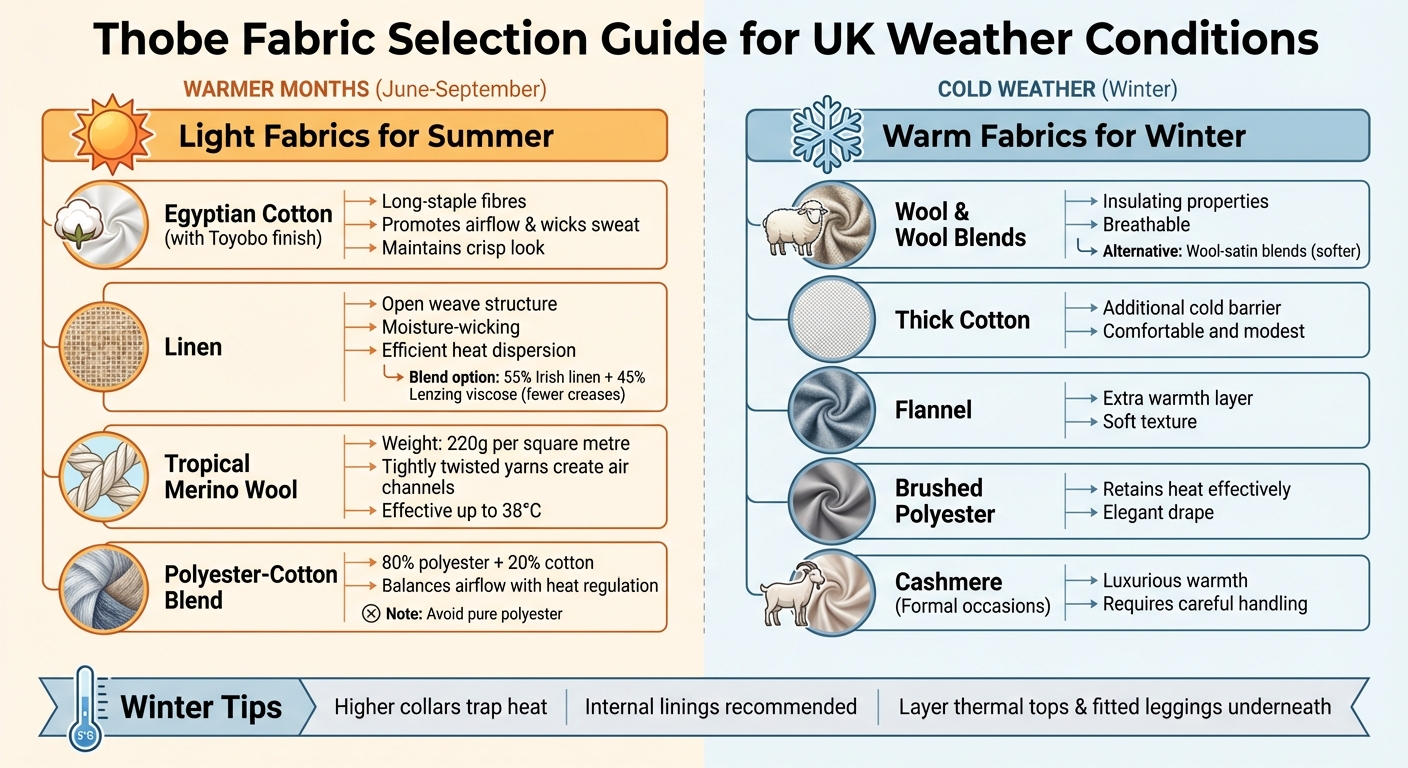
Thobe Fabric Selection Guide for UK Weather Conditions
The UK's famously unpredictable weather makes it essential to choose thobe fabrics that suit each season. What keeps you cool on a sunny August afternoon won't cut it for a frosty January morning. As Yalla World puts it:
The fabric of your thobe controls how cool you stay in a steamy August and how warm you feel during a frosty dawn prayer.
While lightweight cotton and linen are popular in the Middle East, the UK climate calls for a more versatile, seasonal approach. Adapting your fabric choices ensures year-round comfort. Here's a closer look at the best fabrics for warmer and colder months.
Light Fabrics for Warmer Months
From June to September, when temperatures climb, breathability is key. Long-staple Egyptian cotton with a Toyobo finish is a standout option. Its tightly spun fibres promote airflow and wick away sweat while maintaining a crisp, polished look. Linen is another excellent choice, thanks to its open weave and moisture-wicking abilities, which help disperse heat efficiently. For fewer creases, go for a blend of 55% Irish linen and 45% Lenzing viscose.
Surprisingly, tropical merino wool is a great pick for summer Jummah prayers. This lightweight fabric (around 220 grammes per square metre) uses tightly twisted yarns to create air channels that allow heat to escape, even in temperatures as high as 38°C. For a practical option in the UK's mild summers, an 80% polyester and 20% cotton blend balances airflow with heat regulation. However, avoid pure polyester - it lacks the breathability needed for higher temperatures.
Warm Fabrics for Cold Weather
When winter sets in, heavier, insulating fabrics become essential. Wool and wool blends are perfect for keeping warm while still allowing your skin to breathe. For those sensitive to pure wool, wool-satin blends offer a softer alternative without sacrificing warmth. Thicker cotton and flannel provide an additional barrier against the cold, while brushed polyester retains heat and adds an elegant drape to your thobe.
For formal occasions, cashmere is a luxurious option, offering unmatched warmth and softness, though it does require careful handling. When temperatures drop below 5°C, thobes with higher collars and internal linings help trap heat effectively. You can also layer thermal long-sleeve tops and fitted leggings underneath your thobe for added insulation without altering its modest look.
Choosing Colours and Styles for Prayer
Picking the right colour and style for your thobe is about more than just personal preference - it reflects Islamic tradition and ensures a respectful, dignified appearance. For instance, white thobes hold a special place in religious observances like Eid and Friday prayers, symbolising devotion and purity. Beyond white, light neutral tones such as cream, beige, and sand offer a simple yet refined look. These shades embody modesty and humility, aligning seamlessly with Islamic values.
If you're drawn to colours with deeper meaning, green is especially noteworthy in Islamic culture. It is said to have been a favourite of the Prophet Muhammad (PBUH) and is often associated with hope, renewal, and spiritual depth. Below, we'll explore the symbolic meanings of common colours and examine traditional thobe styles that are ideal for prayer.
Common Colours and What They Represent
White thobes are a staple for mosque attire, and for good reason. They adhere to the Sunnah and are practical for the UK's warmer months, as they reflect sunlight effectively. On the other hand, black thobes, though less common for daily prayers, carry an air of dignity and reverence. According to YallaWorldX:
For centuries tribal leaders and scholars traditionally chose dark robes to signal gravity, learning, and piety.
Black is also tied to the kiswa - the cloth that covers the Kaʿbah - underscoring its connection to unity and devotion. It’s particularly fitting for formal evening gatherings or colder months, as darker colours retain warmth.
For a softer aesthetic, light blue evokes calmness and serenity, while grey offers a balanced, neutral option that suits modern, urban styles. During autumn, earthy tones like brown and beige are excellent choices, projecting modesty and a grounded appearance that transitions well between seasons.
Colour is just part of the equation; the style of your thobe also plays a vital role in its message and practicality.
Common Thobe Styles for Jummah and Mosque
Saudi-style thobes are known for their structured design, featuring a stand-up collar and buttoned cuffs. Their tailored fit makes them ideal for Jummah prayers and formal mosque events. The clean, crisp lines of this style convey professionalism and respect, making it a great choice for occasions that call for a polished look.
In contrast, Omani and Emirati styles offer a more understated aesthetic. These collarless designs prioritise simplicity while maintaining elegance. The Omani thobe often features subtle embroidery near the neckline and includes a short decorative tassel called a furakha, making it suitable for special events like Eid or Jummah. The Emirati style, with its longer tassel known as the tarboosh, is equally refined and works well for everyday mosque wear. These designs are not only comfortable for prayer but also uphold traditional values.
sbb-itb-81d10cb
Getting the Right Fit and Tailoring
A well-fitted thobe strikes the perfect balance between modesty and comfort, allowing for ease of movement during Salah. Just like fabric and colour, the right fit plays a key role in maintaining the dignity and modesty required for Jummah and mosque attire.
What to Look for in Fit
Start with the length. The hem should adhere to mosque etiquette, aligning with the Sunnah guidance mentioned earlier. To measure accurately, take the measurement from the edge of your shoulder down to your ankle.
Next, consider freedom of movement. The chest and shoulders should have a relaxed fit. A quick way to check this is by ensuring the collar has enough room to slide two fingers between your neck and the fabric. Sleeves should comfortably reach the wrist without feeling tight or overly loose.
If you're stuck between sizes, go for the larger one. This not only ensures comfort but also allows for layering - particularly useful during the colder months in the UK, when you might want to wear a thermal undershirt beneath your thobe.
Once you’ve found a good overall fit, tailoring can further enhance both the comfort and appearance of your thobe.
Tailoring Options and Adjustments
Custom tailoring takes your thobe to the next level, refining its look and practicality. Features like refined cuffs or stiffened collars, often seen in traditional Saudi and Qatari designs, can add a polished, formal touch suitable for Jummah. If standard sizes don’t quite work for you, look for sellers that offer custom adjustments for areas like chest width or sleeve length to better match your body shape.
For example, Al-Badr Clothing offers thobes in a range of sizes at prices between £19.99 and £32.99. This affordability makes it easier to invest in a well-fitted garment that suits both your needs and your budget. Whether you stick with a standard fit or opt for minor tailoring adjustments, prioritising comfort and modesty ensures your thobe will serve you well for years to come.
How to Care for Your Thobe
Taking proper care of your thobe ensures it stays in excellent condition and lasts longer. With the right washing and storage techniques, you can protect the fabric and keep your garment looking its best.
Washing and Drying Methods
Before washing, turn your thobe inside out. This simple step helps protect the outer fabric from friction and reduces the chances of fading. Stick to cold or lukewarm water, as hot water can weaken the fibres and cause shrinkage. Use a mild detergent meant for delicate fabrics, and steer clear of bleach - it’s far too harsh.
If you’re using a washing machine, place your thobe in a mesh laundry bag and select the gentle cycle. For hand washing, let the garment soak in soapy water for 15–20 minutes. Pay extra attention to areas like the collars and cuffs, using a soft-bristle brush to clean them gently. When finished, don’t wring out the water - this can damage the fabric. Instead, press the water out gently or lay the thobe on a clean towel, rolling it up to absorb the moisture.
Air drying is the best way to preserve the fabric. Hang your thobe on a padded wooden hanger in a shaded area, as direct sunlight can fade the colours. Nasir Islam from Jubbah.uk highlights this point:
Avoid using a dryer, as high heat can shrink or damage the fabric.
Alternatively, you can lay the thobe flat on a clean surface and turn it every 30 minutes to ensure it dries evenly.
Once dry, how you store your thobe is just as important as how you wash it.
Storing Your Thobe Properly
Always store your thobe only after it’s been thoroughly cleaned. Any sweat or oils left on the fabric can lead to permanent stains over time. Use a padded wooden hanger to support the shoulders properly - wire hangers can cause rust stains or snag the material.
Keep your thobe in a cool, dry, and well-ventilated space away from direct sunlight, which can damage the fabric. Instead of plastic garment covers, opt for breathable fabric bags. These prevent moisture build-up, which can lead to yellowing or mildew.
If you have several thobes, rotate them regularly to avoid putting too much wear on any one garment. To keep moths at bay and add a pleasant scent, consider placing cedar blocks or lavender sachets in your storage area.
Conclusion
Choosing the right thobe for Jummah and mosque wear is about finding the perfect balance between modesty, comfort, and personal identity. As MyHijab London highlights, it’s more than just clothing - it’s an expression of faith and individuality.
When selecting a thobe, consider fabrics that suit the season: lighter materials for summer to keep you cool and warmer options for winter. Traditional colours are a great way to honour heritage while staying practical. The fit is just as important. A well-fitted thobe ensures ease of movement while respecting traditional styles.
Caring for your thobe properly - gentle washing, air drying, and careful storage - helps maintain its quality over time. Al-Badr Clothing offers a thoughtfully curated collection of thobes made from premium fabrics with traditional designs. Whether you prefer the refined look of an Emirati-style thobe or the timeless appeal of a classic Saudi design, their craftsmanship ensures durability and elegance. These choices allow you to uphold Islamic traditions while adapting to the practicalities of life in the UK.
FAQs
What fabrics are best for thobes throughout the UK's seasons?
Choosing the right fabric for your thobe is essential to staying comfortable throughout the UK's ever-changing seasons. During the warmer months, lightweight and breathable fabrics like cotton or linen work perfectly. They promote airflow, helping you stay cool and comfortable, making them ideal for summer and those mild, in-between seasons.
As the weather turns colder in autumn and winter, thicker, insulating fabrics such as wool blends or heavy cotton are better suited. These materials provide much-needed warmth while ensuring comfort and modesty. By tailoring your fabric choices to the UK's seasonal shifts, you can enjoy a thobe that’s both practical and stylish no matter the time of year.
How can I choose a thobe that fits well for prayer movements?
To make sure your thobe feels comfortable during prayer, pick a size that allows you to move freely, especially when bowing or prostrating. The ideal fit should avoid being too snug or excessively loose, particularly around the shoulders, arms, and legs.
Measure your chest, waist, and height accurately, then compare these with the retailer’s size chart to find the best option. Opting for a slightly looser fit than your regular clothing ensures you can perform prayer movements with ease while maintaining both comfort and modesty.
What do different thobe colours represent in Islamic tradition?
In Islamic tradition, the colours of a thobe often carry symbolic meanings, which can differ based on culture and region. White is the most commonly recognised and cherished colour, symbolising purity, cleanliness, and humility. It is particularly favoured for significant occasions like Jummah prayers, Eid, and Hajj, as it embodies modesty and devotion.
Darker tones, such as black or brown, are typically linked to formality or solemn occasions. Meanwhile, brighter colours and detailed patterns, often seen in regional variations, may represent celebration or a sense of cultural identity. Ultimately, the choice of colour is shaped by the occasion, personal taste, and local traditions, always with an emphasis on modesty and respect.