


What to Look for When Buying Your First Thobe
When buying your first thobe, focus on three key areas: fabric, fit, and style. The right fabric ensures comfort across seasons - light cotton or linen for summer, wool blends for winter. A proper fit should balance modesty with movement, with the hem just above the ankle and sleeves ending at the wrist. Styles vary by region, from formal Saudi designs to casual Moroccan options, so choose one that suits your needs and occasions.
For daily wear, breathable cotton-poly blends in darker shades like navy or grey are practical, while white or embroidered thobes work well for formal events. Budget options start at £19.99, with premium designs going up to £44.99. Care is simple: wash gently at 30°C, air-dry on padded hangers, and iron on low heat. Proper storage keeps your thobe looking new for years. Whether for prayers, celebrations, or casual wear, your first thobe should blend comfort and elegance.
What to Consider When Buying Your First Thobe
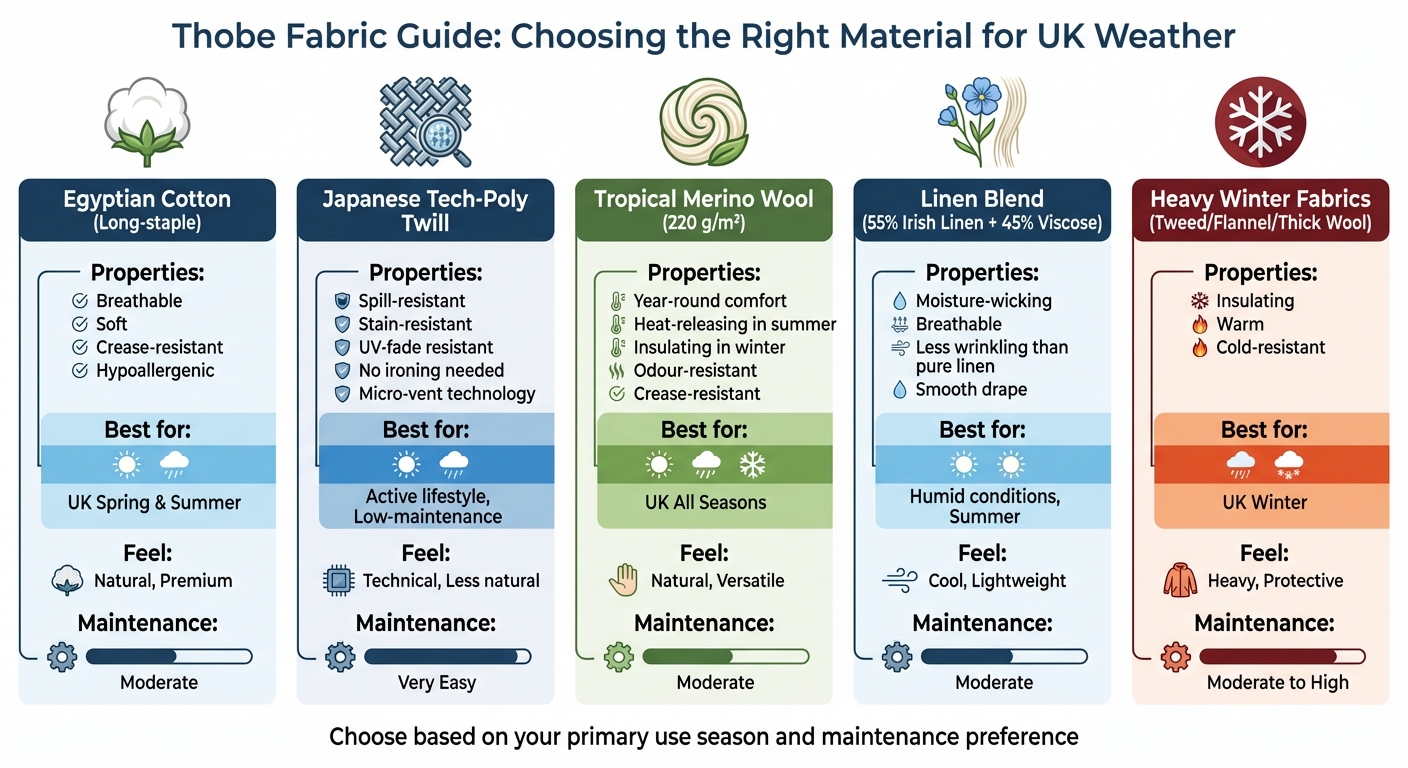
Thobe Fabric Types Comparison Guide for UK Climate
Fabric Quality and Comfort
The fabric of your thobe plays a big role in how it feels to wear and how well it handles daily use. For instance, long-staple Egyptian cotton is a top choice. It's breathable, soft, crease-resistant, and hypoallergenic, making it perfect for the UK's unpredictable spring and summer weather.
If you're often on the move or prefer low-maintenance clothing, Japanese tech-poly twill might be your go-to. This fabric resists spills, stains, and UV fading, plus it doesn’t need ironing. Thanks to its micro-vent technology, it stays ventilated, though it doesn’t quite match the natural feel of cotton. Another great option is tropical merino wool (220 g/m²). This material works well year-round in the UK, releasing heat in summer and insulating warmth in winter. It’s also odour-resistant and resists creases naturally.
For humid conditions, pure linen is excellent at wicking moisture but tends to wrinkle easily. A blend, such as 55% Irish linen mixed with 45% viscose, offers the same breathability but with less wrinkling and a smoother drape. When winter arrives, heavier fabrics like tweed, flannel, or thick wool provide much-needed insulation against the cold.
Once you've settled on fabric, the next step is ensuring the thobe fits just right.
Fit and Sizing
Thobe sizes in the UK - 52, 54, 56, and so on - refer to the length in inches from the shoulder to the ankle. Your height is key to picking the right size, but don’t overlook chest width and body weight to ensure the garment doesn’t feel tight across your torso. Ideally, the hem of your thobe should sit just above the ankle to avoid dragging.
To measure yourself, stand straight and use a soft measuring tape. Start at the point where your neck meets your shoulder, not from the neck itself. Sleeves should end at the wrist bone, ensuring they don’t ride up during prayer or get in the way. As MyHijab London puts it: "When in doubt, a slightly loose fit is better than too tight". For winter, you might want a looser fit to allow for layering underneath. And if adjustments are needed, professional tailoring for sleeve or length alterations is affordable, typically costing between £5 and £10.
Regional Style Differences
The design of a thobe can vary greatly depending on its regional origins, offering unique touches that reflect different traditions. Saudi thobes feature a formal, stiff collar, buttoned cuffs, and a front placket, making them ideal for professional or formal occasions. On the other hand, Emirati kanduras are collarless and include a long, detachable tassel called a tarboosh. Their looser fit makes them more breathable and comfortable.
For a sleeker, tailored look, Kuwaiti dishdashas are a great choice. These have a soft, rounded collar and hidden buttons, giving them a minimalist and polished vibe. Meanwhile, Moroccan styles bring a splash of colour and intricate embroidery. The Djellaba often includes a pointed hood and heavier fabric, while the Gandoura is a lightweight, short-sleeved alternative popular in warmer settings.
In the UK, there’s a growing preference for tailored, slim-fitting thobes over the traditional loose cuts. Darker shades like navy, black, and charcoal are becoming more popular, aligning with Western fashion trends and the colder British climate. This marks a shift from the lighter, heat-reflecting whites commonly worn in the Middle East.
sbb-itb-81d10cb
Selecting a Thobe for Different Occasions and Weather
Thobes for Different Occasions
When choosing a thobe, it’s important to consider choosing the perfect thobe for the occasion. For formal events like weddings, Eid celebrations, or Friday prayers, a classic white thobe is the go-to option. These are often crafted from premium fabrics like cashmere, jacquard, or silk blends. Many formal thobes are adorned with intricate embroidery on the collar, chest, and cuffs, along with decorative buttons that add a touch of sophistication.
For casual, everyday wear, darker shades such as navy, grey, or beige are more practical. These colours are great for hiding dust and dirt, especially in the UK's unpredictable weather. Casual thobes are typically made from breathable and durable materials like cotton-polyester blends or linen. They often feature subtle detailing and functional elements like pockets, making them ideal for daily use. A simple design in neutral tones ensures versatility, allowing the thobe to transition easily between settings. When styling, avoid pairing a formal white thobe with black trainers - opt for footwear that complements the outfit without creating a stark contrast.
Adapting your thobe to the occasion ensures you’re appropriately dressed while maintaining comfort and style.
Weather and Seasonal Factors
The UK's ever-changing weather calls for thoughtful fabric choices depending on the season. During summer, light fabrics such as cotton or linen are ideal. These materials, especially in lighter colours, help reflect sunlight and improve airflow. Linen, in particular, works well on warm days, especially when combined with a loose fit and a lower collar to maximise ventilation.
In winter, heavier fabrics like wool blends or thick cotton are more suitable. Darker shades such as navy, black, or charcoal not only look elegant but also help retain warmth. Layering becomes key - consider wearing a white cotton undershirt, thermal leggings, or even a woollen shemagh for added insulation.
For spring and autumn, opt for fabrics that strike a balance between breathability and durability, like cotton-polyester or cotton-linen blends. A slightly oversized fit allows room for layering with a lightweight jacket, ensuring your thobe remains practical and comfortable no matter the season.
Budget and Getting Good Value
Price Range and Features
When shopping for your first thobe, aim for a price range of £19.99 to £32.99 to secure a quality garment. Thobes in this bracket often feature breathable poly-cotton blends, modern designs like hidden zip closures, and timeless styles suitable for both everyday wear and religious gatherings. These fabrics are ideal for beginners since they hold their shape well with regular use.
For example, Al-Badr Clothing offers their Essentials Emirati Thobe at £32.99. Other options include Moroccan styles priced at £34.99, premium Winter Emirati or Qatari designs ranging from £36.99 to £39.99, and high-end Bahraini thobes at £44.99. To sweeten the deal, Al-Badr provides free UK shipping on orders above £50 and same-day dispatch for purchases made before 12pm.
While considering cost, look for features that ensure durability and versatility. A well-fitted thobe in classic colours like navy, grey, or white can easily adapt to a variety of occasions, making it a practical addition to your wardrobe. Additionally, choosing a length that falls just above the ankle not only prevents dragging and wear but also extends the garment's lifespan, offering excellent value for money.
How to Care for Your Thobe
Washing and Ironing
To keep your thobe in top condition, always check the care label for specific instructions. Generally, wash it in water no hotter than 30°C to avoid shrinkage or damage to the fibres. Use a mild, non-biological detergent and steer clear of bleach, as it can weaken the fabric and cause white thobes to develop a yellowish tint.
Before washing, turn your thobe inside out and remove any detachable items like tassels, buttons, or collar stays. If you're using a washing machine, opt for a delicate cycle with low spin, ideally placing the thobe in a mesh laundry bag. For lightweight summer fabrics, hand washing is often better. Submerge the garment in soapy water, gently agitate it, and rinse thoroughly.
Avoid wringing your thobe to remove water. Instead, roll it up in a clean towel to absorb excess moisture, then air dry it on a padded hanger, keeping it away from direct sunlight to preserve its colour. When it comes to ironing, slightly damp fabric is easier to work with. Turn the thobe inside out and iron on a low to medium heat setting. Start with the collar and cuffs, then move to the sleeves and larger panels. For poly-cotton blends, stick to lower heat to prevent shine or fibre distortion.
Once your thobe is clean and wrinkle-free, proper storage is key to maintaining its quality.
Storage
After washing and ironing, store your thobe thoughtfully to keep it in great shape. Use a wide wooden or padded hanger to maintain its structure and avoid thin wire hangers, which can stretch the fabric or leave unsightly marks. Always ensure the garment is completely clean before storing it, as lingering sweat or stains can lead to permanent discolouration.
Place your thobe in a cool, dry, and well-ventilated wardrobe, away from direct sunlight, which can fade colours and weaken the material. A breathable garment bag is ideal for protecting it from dust and pests, unlike plastic covers that may trap moisture and encourage mildew. To keep your storage area fresh and pest-free, consider adding cedar blocks or lavender sachets. Make sure there's enough space between garments to prevent unnecessary wrinkling, especially for pieces with embroidery.
Conclusion
Picking your first thobe doesn’t have to be complicated. Focus on three key factors: fabric quality, fit, and style. Lightweight fabrics like cotton and linen are ideal for staying cool during warmer months, while wool blends offer the warmth you need in winter. Make sure your thobe fits comfortably, allowing for ease of movement while maintaining modesty.
Taking care of your thobe is just as important as choosing the right one. As Alif Thobes puts it, "A well-maintained Jubba for men can last you years and still look brand new". Follow the care instructions on the label and store your thobe properly to keep it looking sharp and extend its lifespan.
Once you’ve mastered thobe care, finding the perfect style becomes even more enjoyable. Brands like Al-Badr Clothing offer a wide range of options for beginners. Their Essentials Emirati Thobes start at £32.99 for everyday wear, while Qatari Thobes priced at £39.99 provide a polished, professional look. For formal occasions, consider Bahraini Thobes made from premium Italian wool or Japanese cotton, starting at £44.99. Seasonal picks include lightweight Moroccan styles for summer at £34.99 or English wool winter thobes at £36.99.
FAQs
How do I choose between cotton, linen and wool?
When choosing fabric for a thobe, think about the weather and purpose. For warm climates or everyday wear, cotton is a great choice due to its breathable nature. Linen works well for hot weather or summer gatherings, thanks to its lightweight feel. On the other hand, wool offers insulation and is better suited for colder seasons. Picking the right fabric ensures both comfort and functionality.
What if I’m between thobe sizes?
If you find yourself between thobe sizes, it’s a good idea to check a detailed size guide and measure key areas like your neck, shoulders, and arms. Once you have your measurements, compare them to the chart provided.
If you’re unsure, it’s safer to go for the larger size. This offers more comfort, especially if you like a looser fit or need extra room for movement or warmer weather. A slightly bigger thobe can make wearing it for long periods much more comfortable.
Can one thobe work for both casual and formal wear?
Yes, a single thobe can work for both casual and formal occasions. The key lies in its design, fabric, and styling. Choose a thobe in neutral colours or simple, classic patterns for versatility. Pair it with the right accessories - like a sleek watch or formal shoes - to adjust the overall look to suit the event's level of formality.