


Why Fit Matters More Than Trend in Modest Clothing
When it comes to modest clothing, the fit of your garments is far more important than following fleeting trends. A well-fitted abaya or thobe (see our guide to choosing abayas) not only ensures comfort and ease of movement but also aligns with the principles of modesty and dignity. Poorly fitted clothing, on the other hand, can compromise both appearance and functionality, leaving you uncomfortable and self-conscious.
Key Takeaways:
- Fit over Trends: Prioritising proper fit ensures modesty, comfort, and confidence. Trends often sacrifice these essentials for aesthetics.
- Comfort and Movement: Ill-fitting garments restrict movement and can feel awkward, while well-fitted pieces allow for natural ease.
- Longevity and Value: Tailored clothing lasts longer, looks better, and is a smarter investment than chasing fast-fashion trends.
- Environmental Impact: Trend-driven fast fashion contributes to waste, while quality, tailored garments reduce this issue.
- Practical Tips: Accurate measurements, fabric choice, and tailoring are key to achieving the right fit. Simple adjustments like hemming and sleeve alterations can make a big difference.
Focusing on fit ensures your clothing serves its purpose, reflects your values, and helps you feel confident every day.
The Problem: Trends Over Fit in Modest Fashion
The Muslim fashion market is expected to reach an impressive value of approximately £251 billion by 2024. Yet, many individuals seeking modest clothing face a recurring challenge: finding garments that are both stylish and comfortable. The issue lies in the growing obsession with trends that prioritise visual appeal over proper fit. Social media is flooded with images of cinched waistlines, dramatic sleeves, and layered chiffon capes, steering attention away from what modest clothing is fundamentally about - providing dignified coverage and comfort. This fixation on aesthetics often leads to practical issues in everyday wear. Let’s explore how this trend-first approach is compromising both comfort and appearance.
How Poor Fit Affects Comfort and Appearance
When garments prioritise trends over functionality, both comfort and style take a hit. For instance, trend-focused designs often feature tight fits that restrict movement, causing discomfort in areas like the chest, waist, or hips during routine activities. Similarly, oversized sleeves and heavy embellishments can overwhelm smaller frames, making everyday tasks unnecessarily difficult.
Material choice also plays a role. Fast-fashion items frequently rely on inexpensive synthetic fabrics like polyester, which can trap heat and irritate the skin. On the other hand, garments with a better fit often incorporate breathable natural materials like cotton or linen, offering a more comfortable experience. Poorly fitted clothing can even affect confidence - imagine a boxy abaya on someone with an hourglass figure or hems that drag and bunch underfoot. These missteps can leave wearers feeling awkward rather than elegant.
A striking example of this struggle came in November 2020, when model Halima Aden publicly stepped away from the fashion industry. She revealed that the pressure to conform to trends led her to compromise her religious values, such as using jeans as a headcovering or adopting styles that didn’t align with her modest principles. Her story highlights how chasing trends can create internal conflict, while a well-fitted garment can provide a sense of ease and confidence. Beyond physical discomfort, these issues also raise financial and environmental concerns.
The Real Cost of Chasing Trends
Choosing trendy, low-quality garments often comes with hidden costs. Items designed for fleeting fashion moments tend to lose their shape after a few washes, leading to frequent replacements. For example, while luxury abayas adorned with intricate stonework can range from £300 to £800, they fail to deliver value if the fit is poor. In contrast, ethically crafted cotton abayas priced between £65 and £75 offer greater longevity and better value when tailored correctly.
The environmental cost is another significant concern. Fast-fashion modest wear contributes to textile waste, much of which ends up in Muslim-majority regions, exacerbating environmental problems. Trendy pieces with bold, statement elements - like dramatic sleeves or layered capes - often lack versatility. This makes them difficult to repurpose for different occasions, resulting in a wardrobe full of items that neither fulfil modest wear’s purpose nor stand the test of time. Learning how to style everyday abayas can help ensure these pieces remain versatile and timeless.
"It is not just a short-lived fad; it is a need because it is something that is embedded in our mindset and beliefs that will remain with us for life."
- Sarah Al-Zaher
sbb-itb-81d10cb
Why Fit Matters More Than Trends
The Islamic clothing market is expected to reach USD 128.72 billion by 2032, with women's modest wear making up around 75.9% of total revenue. These numbers highlight immense opportunities, but they also remind us of a key truth: no trend can outshine the enduring benefits of a perfect fit. The real value lies in the dignity, comfort, and confidence that a well-fitted garment brings.
The concept is simple. A properly fitted garment achieves modesty by draping elegantly - neither too tight nor overly loose - while maintaining a polished and intentional look. This isn't about choosing between modesty and style; it's about recognising that true elegance comes from clothing that works with your body rather than against it.
Building Confidence with Proper Fit
When your clothes fit well, you feel at ease. Experts often describe this as a "made for you" feeling - a sense of grace that eliminates self-consciousness. A well-fitted garment allows for natural movement without the need for constant adjustments.
Fit also ties closely to body shape. For instance, an A-line cut gently skims over the hips, making it ideal for pear-shaped figures, while an empire waist offers a lengthening effect for apple-shaped bodies. These thoughtful design elements not only uphold modesty but also flatter your natural proportions, giving you a polished look that reflects your personal style. This confidence in your appearance lays the groundwork for practical fit strategies, which we’ll explore further in the next section.
Combining Modesty with Comfort
Proper fit is not just about aesthetics - it’s also key to everyday comfort. Modesty and comfort can go hand in hand when the fit is carefully considered. A well-designed garment can provide full coverage without restricting movement, whether you're driving, sitting, or bending.
Achieving this balance starts with accurate measurements. For instance, when measuring the bust for a modest fit, leaving a few extra centimetres ensures the fabric doesn’t cling. Shoulder seams should align perfectly with your natural shoulder line; seams that are too narrow feel tight, while those that are too wide can look awkward. For garment length, aim for 2.5–5 cm below the ankle, adding the same allowance if you’re wearing heels.
Fabric choice also plays a major role. Matte, breathable materials like crepe and cotton provide the structure and comfort needed for garments to drape gracefully without clinging. Paying attention to these details ensures that modesty doesn’t come at the cost of feeling "suffocated" in areas like the neck, shoulders, or sleeves.
"A well-fitted abaya drapes beautifully, enhances your overall look, and allows for effortless movement." - Modesque
The Islamic principle of haya' (dignity and humility) is reflected in clothing that feels intentional and respectful. When garments fit properly, they don’t just meet religious guidelines - they embody them with poise. This harmony between faith, comfort, and appearance creates a sense of fulfilment that no passing trend can match.
How to Find the Right Fit
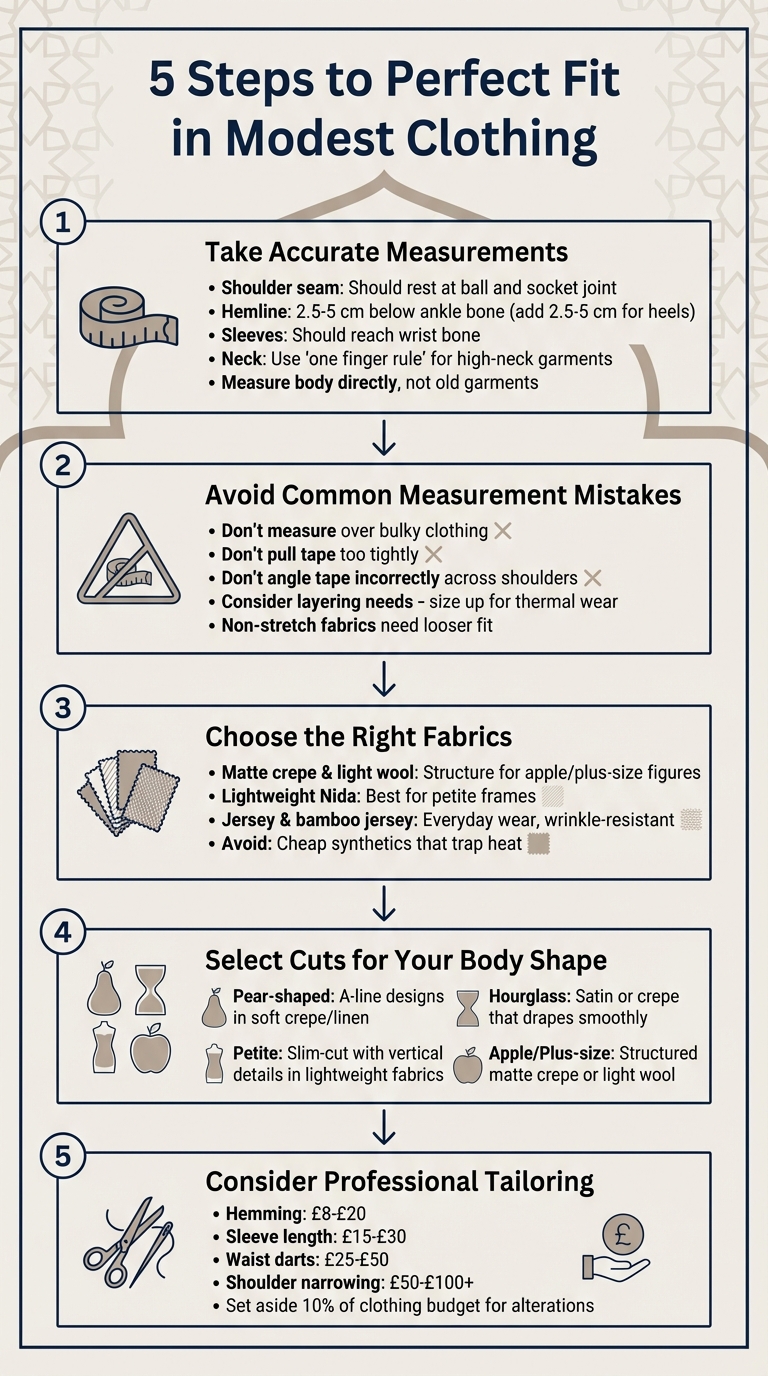
5-Step Guide to Finding the Perfect Fit in Modest Clothing
Getting the right fit starts with knowing your measurements. This isn’t just about comfort - it ensures your clothing aligns with modesty principles while sitting perfectly on your body. For example, the shoulder seam is a crucial detail. It should rest exactly at the ball and socket joint of your shoulder, keeping the garment from sliding down or pulling awkwardly inward.
For abayas, the hemline matters too. Ideally, it should fall 2.5–5 cm (around 1–2 inches) below your ankle bone. This length provides full coverage when you sit or bend without dragging on the floor. If you regularly wear heels, adding an extra 2.5–5 cm helps maintain the intended flow of the garment.
Sleeves are another key area to consider. They should reach your wrist bone - too short can compromise modesty, while overly long sleeves may restrict movement. For high-neck garments or thobes, try the "one finger rule." Place one finger between your neck and the tape measure to ensure the collar sits comfortably without being tight. Always measure your body directly rather than using old garments, as those may have stretched or shrunk over time.
"A thobe should reflect dignity, comfort, and modesty. When the fit is wrong, too tight, too loose, too short, or too long, the entire look suffers." - MD Hafijul Islam, Founder, Sunaan
Avoiding Common Measurement Mistakes
Even with guidelines, measurement errors are common. For instance, measuring over bulky clothing, pulling the tape too tightly, or angling it incorrectly across the shoulders can throw off the results. It’s also important to think about how to style layers without compromising modesty, especially in colder weather. Sizing up slightly allows room for turtlenecks or thermal wear without making your outer garments look bulky. For non-stretch fabrics like chiffon or georgette, opt for a looser fit, while stretchier materials like jersey can allow for a closer (but still modest) silhouette.
Choosing the Right Fabrics
Fabric choice plays a big role in achieving a polished look. Matte crepe and light wool hold their structure well and are excellent options for apple-shaped or plus-size figures. Petite frames benefit from lightweight materials like Nida, which avoid overwhelming the silhouette. For everyday wear or travel, jersey and bamboo jersey are great picks - they stretch, resist wrinkles, and stay comfortable all day. These are essential modest pieces for any wardrobe. On the other hand, steer clear of cheap synthetic fabrics that trap heat and lack breathability, as they can make long days uncomfortable.
Cuts That Flatter Your Body Shape
Your body shape should guide your choice of cuts and styles. Pear-shaped figures often look best in A-line designs made from soft crepe or linen, as these skim over the hips gracefully. Hourglass shapes shine in satin or crepe, which drape smoothly over curves without adding unnecessary bulk. Petite frames should consider slim-cut designs with vertical details in lightweight fabrics to avoid being overwhelmed by excess material. When the fit complements your proportions and the fabric moves naturally with your body, you achieve a look that feels effortless while embracing the elegance of modest fashion.
Tailoring and Alterations for Perfect Fit
Once you've got the right measurements, tailoring is the next step to achieving a flawless fit. It doesn’t just enhance the garment’s appearance; it also upholds the balance of modesty and comfort. Ready-to-wear modest clothing often misses the mark on fit, but tailoring can bridge that gap. Even small tweaks can make a huge difference, transforming how a garment drapes and moves with you.
Simple Alterations That Make a Big Difference
One of the most common fixes is hemming, especially for abayas and thobes. This typically costs between £8–£20. For abayas, the ideal length is just at the ankle bone or about an inch above the floor. Thobes, on the other hand, are usually hemmed to the top of the ankle for ease and safety. Pro tip: always bring along the shoes you’ll wear most often with the garment - heels or flats can change the length you need.
Another straightforward adjustment is sleeve length, which generally costs £15–£30. Sleeves should end at the wrist bone, ensuring both comfort and proper modesty. For thobes, pay extra attention to the wrist circumference and sleeve opening - these details can elevate the overall look.
Adding waist darts is another game-changer, costing around £25–£50. Darts can give a more tailored shape to an otherwise boxy abaya while still maintaining modesty. This works best for garments that fit well in the shoulders and hips but lack definition in the middle. If darts aren’t an option, a simple belt can help control excess fabric.
"Fit and construction matter more than brand, trend, or price point. Small changes consistently transformed how clothing looked and how often it was worn." - Megan Kristel, Founder, The Well Dressed Life
For anything beyond these basic fixes, it’s time to call in a professional tailor.
When Professional Tailoring Is Worth It
While simple adjustments can handle minor fit issues, professional tailoring is essential for more intricate changes. For example, shoulder narrowing - which can cost £50–£100+ - is crucial for choosing the right thobe. The shoulder seam sets the tone for the entire garment’s structure. If it’s off, the chest drape and sleeve alignment will also look awkward.
A good rule of thumb is to set aside about 10% of your clothing budget for alterations. This allows you to invest in quality pieces that fit your widest measurements (like shoulders or hips) and then tailor the rest to fit perfectly. Most professional tailors need 4–7 business days to complete their work, depending on their schedule.
That said, avoid garments requiring more than three major alterations - it’s usually better to find something closer to your size from the start. Similarly, skip tailoring for low-quality fabrics that won’t hold their shape or trendy items where the alteration cost outweighs the garment’s value. Instead, focus your tailoring budget on well-made pieces crafted from durable materials like crepe, wool, or structured cotton. These are the pieces that will stay in your wardrobe for years.
Building a Wardrobe Based on Fit
After understanding the value of professional tailoring, the next step is creating a wardrobe that revolves around perfect fit. This isn’t about owning a massive collection of clothes - it’s about curating items that not only fit well but also serve multiple purposes. A well-thought-out wardrobe prioritises versatility and functionality.
Choosing Classic, Multi-Purpose Pieces
Start with a foundation of 35 to 45 pieces that can be mixed and matched effortlessly. This might include 8–10 tops (like tunics or blouses), 5–7 bottoms (such as wide-leg trousers or maxi skirts), 5 layering options (longline cardigans or blazers), 4–6 dresses, and 3–4 outerwear pieces. The focus should always be on how the clothing fits your body, rather than the size on the label.
Stick to neutral colours like black, ivory, navy, or taupe as your base, and add two or three accent colours that complement your skin tone. For abayas, breathable fabrics like cotton blends, wool, or fluid crepe are ideal - they drape beautifully and offer durability. A neutral-toned abaya, for instance, can easily go from casual to formal with a simple change of accessories or the addition of a longline blazer.
"A perfectly tailored pair of trousers will outperform three ill-fitting ones, both in style impact and longevity." - MOJEH Team
Select silhouettes that skim over the body rather than cling to it. A-line skirts, wide-leg trousers, and relaxed tunics are great choices - they balance modesty with a polished look. When shopping, prioritise garments that fit your widest measurements first (like shoulders or hips) and tailor the rest for a perfect fit. Natural fabrics such as cotton, linen, and viscose are excellent for their breathability and longevity, making them ideal for a wardrobe that stands the test of time.
This approach naturally leads to a capsule wardrobe, where every piece is both practical and timeless.
Using Capsule Wardrobes to Reduce Trend Dependence
A capsule wardrobe is built around essentials that work seamlessly together. Interestingly, fashion experts note that most people only wear about 20% of their wardrobe regularly - a capsule ensures that nearly everything gets used, cutting down on decision fatigue and reducing the temptation to chase fleeting trends.
The beauty of a capsule wardrobe lies in its adaptability. For example, a well-fitted abaya can transition from day to evening with the right layering, while wide-leg trousers pair beautifully with tunics or tailored blazers, ensuring modesty and versatility. This thoughtful approach allows for countless outfit combinations without unnecessary clutter.
To maintain an intentional wardrobe, consider the "one-in, one-out" rule: for every new item you add, remove one that no longer aligns with your needs or values.
"A modest capsule wardrobe is not about limitation or uniformity; it is about clarity. It allows you to dress with purpose whilst honouring coverage, comfort, and personal values." - MOJEH Team
When shopping, always prioritise fit over fleeting trends. A single, well-tailored piece will serve you far better than several trendy items that don’t work together, ensuring your wardrobe remains functional and stylish across seasons.
Conclusion
When it comes to modest fashion, fit stands the test of time far better than fleeting trends. A perfectly fitted abaya, thobe, or hijab not only elevates your appearance but also embraces the Islamic value of haya. It ensures comfort throughout your day while nurturing a sense of confidence that comes from wearing clothing tailored with you in mind.
The global halal fashion market is expected to grow to USD 571.4 billion by 2030, yet one principle remains constant: a garment that fits you well will always outshine a wardrobe full of trendy but ill-fitting pieces.
"Modest fashion isn't just about fabric. It's about freedom. And sometimes, freedom looks like a single, humble abaya." - Amani's Team
Prioritising quality over quantity isn’t just a wise financial choice - it aligns with spiritual values too. Well-made, properly fitted clothing lasts longer, requires less upkeep, and simplifies your wardrobe. These pieces empower you to move comfortably and dress intentionally, reflecting your principles rather than the fleeting pull of trends.
To build a wardrobe that works for you, start by taking accurate measurements, understanding your body shape, and turning to professional tailoring when necessary. Focus on items that not only fit your size but also complement your lifestyle and beliefs. The right fit can transform even the simplest garment into something timeless and elegant, allowing you to focus on what truly matters.
Choose fit. Choose quality. Choose freedom.
FAQs
How do I know if an abaya fits properly?
To get the right fit for an abaya, its length should ideally cover your feet without dragging, sitting about 1–2 inches below the ankle. Around the shoulders and bust, the fit should feel comfortable - neither too tight nor restrictive. Pay attention to how the fabric drapes; it should fall smoothly without creases and allow for easy movement. Taking your height and shoulder width measurements and comparing them against size charts can also guide you in selecting the perfect size.
What measurements should I take before buying a thobe?
Before buying a thobe, take accurate measurements of your shoulder width, chest circumference, arm length, and the thobe length from your shoulder to the desired hemline. These measurements are key to ensuring a comfortable fit while maintaining modesty.
When is tailoring worth paying for?
Paying for tailoring is worthwhile when you're aiming for that flawless fit, highlighting your best features, addressing any insecurities, or ensuring modest clothing fits properly while honouring modesty guidelines. A tailored garment not only offers better comfort and confidence but also elevates your overall look, making it a smart addition to your wardrobe.